Summary (by AI): Reading, Berkshire; Huntley & Palmers history; Biscuit tin invention; 5,000 employees; Office building with original logo; New apartments with sawtooth roofs; Restored Victorian railway tunnel; Museum of English Rural Life; Palmer family mansion; Controversial centenary tin design; Reading FC "Biscuit Boys" nickname;
Blog: I live in Henley-on-Thames, so Reading is one of the larger towns closest to me, and I find myself there reasonably often. Because of this, I was vaguely aware of a connection between Reading and biscuits. In fact, only a year or two ago, I looked into potentially buying a rental flat in an apartment block called The Biscuit Factory. I knew that close to the block were the remnants of an old factory, so when I started researching the industrial side of Berkshire, I quickly came across Huntley & Palmers and thought I’d give it a look.

Digging a bit deeper, it's actually pretty cool. To be honest, the area of Reading where the old factory was based is somewhere I usually only visit now because of the Decathlon—and, don't tell anyone, the McDonald's as well. But doing a bit of research, the history is quite fascinating. They started off as a relatively small biscuit manufacturer, but the thing that really made them take off was the clever invention of the biscuit tin. Since they were based on the London to Oxford Road—which, in the days of the horse and cart, was effectively the equivalent of the M1—this tin was incredibly important.
They essentially invented the first equivalent of takeaway food—much like the McDonald's I mentioned earlier. The tin meant the biscuits could survive a harsh journey by horse and cart over all the ruts and bumps of the road, and it also meant they stayed fresh for a decent amount of time. Consequently, business took off massively. As the company grew, they started taking over sites in and around Reading, eventually employing up to 5,000 people. It was an absolutely incredible transformation of the town centre.

It’s a bit of a shame because, walking around today, there's hardly any of it left. There is one big, office-like building that is still adorned with the Huntley & Palmers logo, but the rest of the factory site has, unsurprisingly, been knocked down. To be fair, they have recently built a new set of apartment blocks there which are actually quite nice. As a nod to the old factory, they've designed a sawtooth shape on the roof, just like the old industrial units had to let light into the factory floor.
I went for a good walk around, but the place where Google Maps said the plaque was is now pretty much a drug den. I had a quick wander down by the river, but it wasn't very nice down there, so I gave up on that pretty quickly and couldn't find the plaque. I did, however, have a little walk around the back of Decathlon—which, again, wasn't a particularly nice place to go.

The reason I went that way is because about ten years ago, they resurrected the old biscuit tunnel. Because the factory had grown so large, Huntley & Palmers had to build a tunnel under the railway. It fell into disuse after a while, but they ended up restoring it, so it's now a pedestrian route once again. It’s one of those things where, if you walked through without doing any research, you wouldn’t have a clue. It just looks like a standard pedestrian railway underpass—the kind with dodgy lights and graffiti—but it actually has an incredible history behind it, which I thought was fascinating.
I started my walk up where the Palmer family used to live. Their grand old mansion has now been turned into the Museum of English Rural Life. I’d done a bit of research on that and wrote up an entry for it, only to get home and realise I’d already done an entry on a Berkshire museum. So, I now have two museum entries! I think I'll keep the other one—the aviation museum—as it feels a bit more uniquely Berkshire than the Museum of Rural Life, even though the latter is an incredibly good museum that I highly recommend.
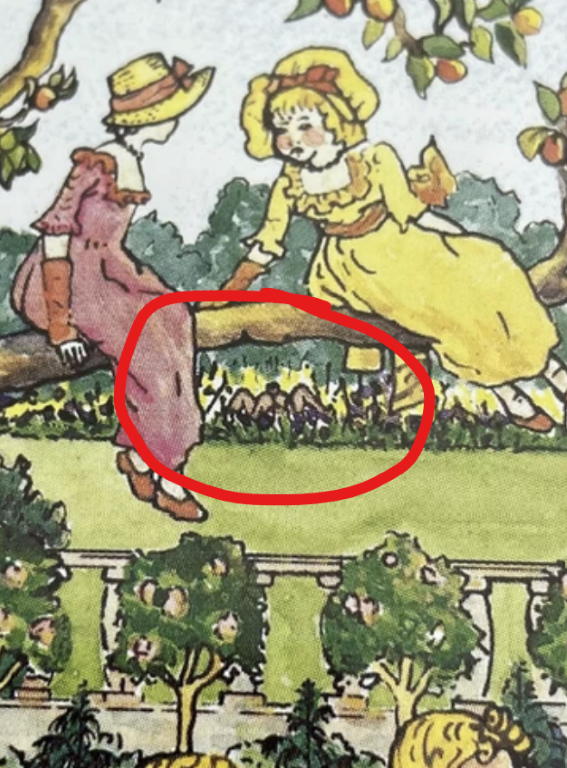
One final thing I wanted to mention about Huntley & Palmers is to do with their biscuit tins. Around the 1970s or 80s, they commissioned a local artist to design a special centenary celebration tin. The tin was printed, manufactured, and sent literally all over the world. But then they started getting complaints. If you look closely at the design—really zoom in—there's a couple fornicating in a hedge (not a bin, sorry!) and a dog having a very good time with another dog. This artist had managed to hide a couple of cheeky "gotchas" inside the biscuit tin design. They did eventually recall the tins, so I assume they are proper collectors' items now, which I think is absolutely brilliant.
So, that was a nice little trip around the history of Huntley & Palmers. And, of course, that's where the Reading football team got their old nickname from: the Biscuit Boys.
The Map: