Summary (by AI): Visiting Chislehurst Caves for a private tour was a fascinating and atmospheric experience that unveiled its long history as Roman/Saxon chalk mines, a massive WWII air-raid shelter, and a legendary music venue.
Blog: I’m fairly certain I’ve never set foot in Chislehurst before today. As Google Maps guided me toward the site, it felt like I was heading away from where a set of caves ought to be— I went up a very steep hill, took a sharp left followed by a sharp descent, and suddenly found myself in a strange, wooded dell. Tucked away there was a building that looked remarkably like a 1950s Scout Hut. As it turns out, that unassuming hut is the entrance to Chislehurst Caves.
I turned up on a random Thursday in February. They run tours every hour, but as luck would have it, I was the only person there. I ended up having a private, hour-long trek through the tunnels with a fantastic guide. He was a local guy who clearly knew his stuff; he even admitted to breaking into the caves to explore back when he was a kid.
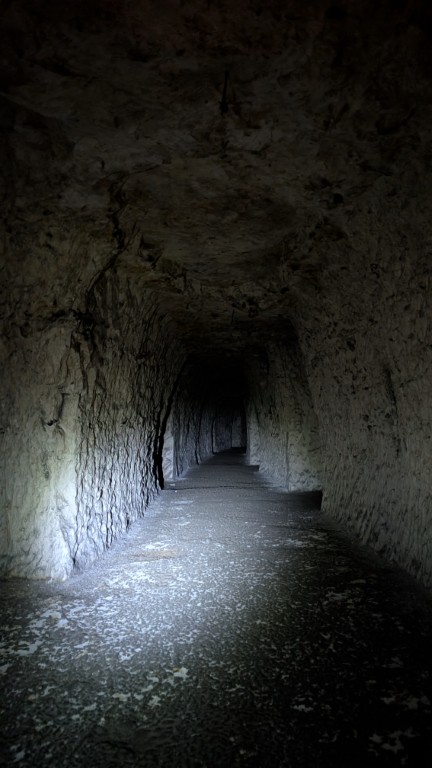
From what I gathered, the history of the place is a bit of a mix. While no one is 100% certain of the origins, the consensus is that the two main sections began as Roman and Saxon chalk mines. It makes perfect sense when you’re down there; you can see how the paths were driven directly out of the chalk. Later, in the 1800s, they added a "middle section" to extract more chalk for the various industries of the time. The chalk was in high demand for brickmaking—it was added to clay to create the iconic yellow stock bricks used to build Victorian London—and for lime burning, which produced lime for mortar, plaster, and agricultural fertilizers. They even mined flints here to fire the tinderboxes and flintlock guns of the era.
Eventually, the site fell into disrepair as a working mine. That’s when the caves found a second life as a tourist attraction, opening to the public in 1900. It was largely the work of William Nichols, a local archaeologist and "marketing genius" of sorts, who rebranded the mines as ancient, "genuine caves." In 1903, he spun elaborate theories claiming they were the work of Druids, Romans, and Saxons—myths that drew national attention and massive crowds. The nearby Bickley Arms Hotel even got in on the act, hosting cave parties and famously keeping a dog trained to track down any tourists who wandered off and got lost in the labyrinth.
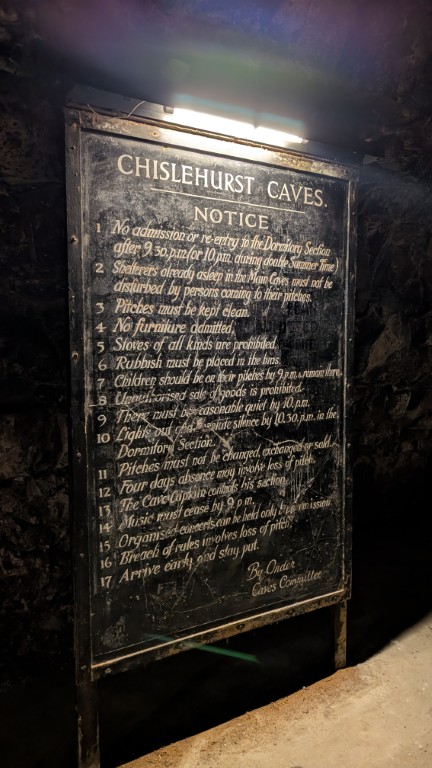
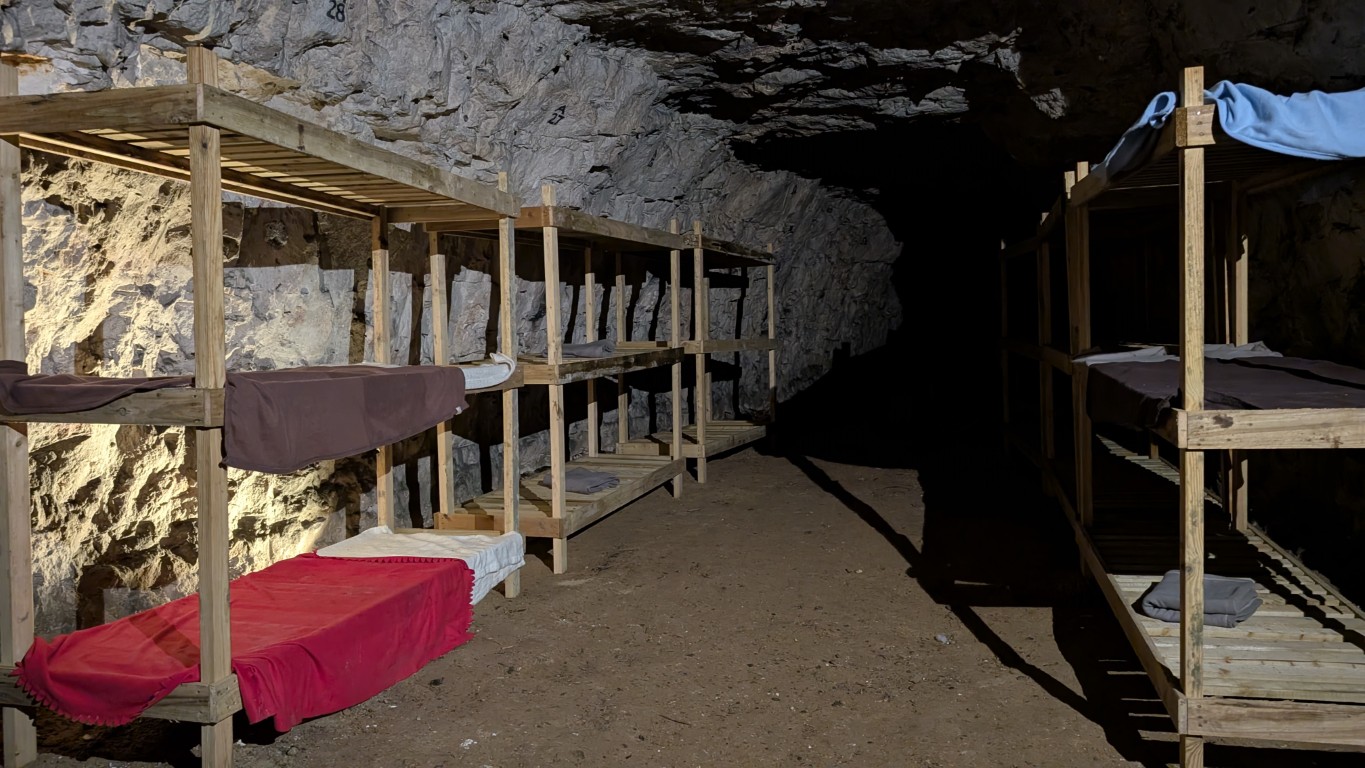
During the war, the site was requisitioned by the Army. It served as an ammunition base, but more famously, it became a massive air-raid shelter. The scale of the infrastructure down there is incredible. You can still see the remnants of toilets, showers, barbers, and even hospitals. It’s wild to imagine it in full swing—a massive, organized system where upwards of 15,000 people lived underground overnight. They even had a strict "lights out" policy with no noise allowed after 10:00 PM.
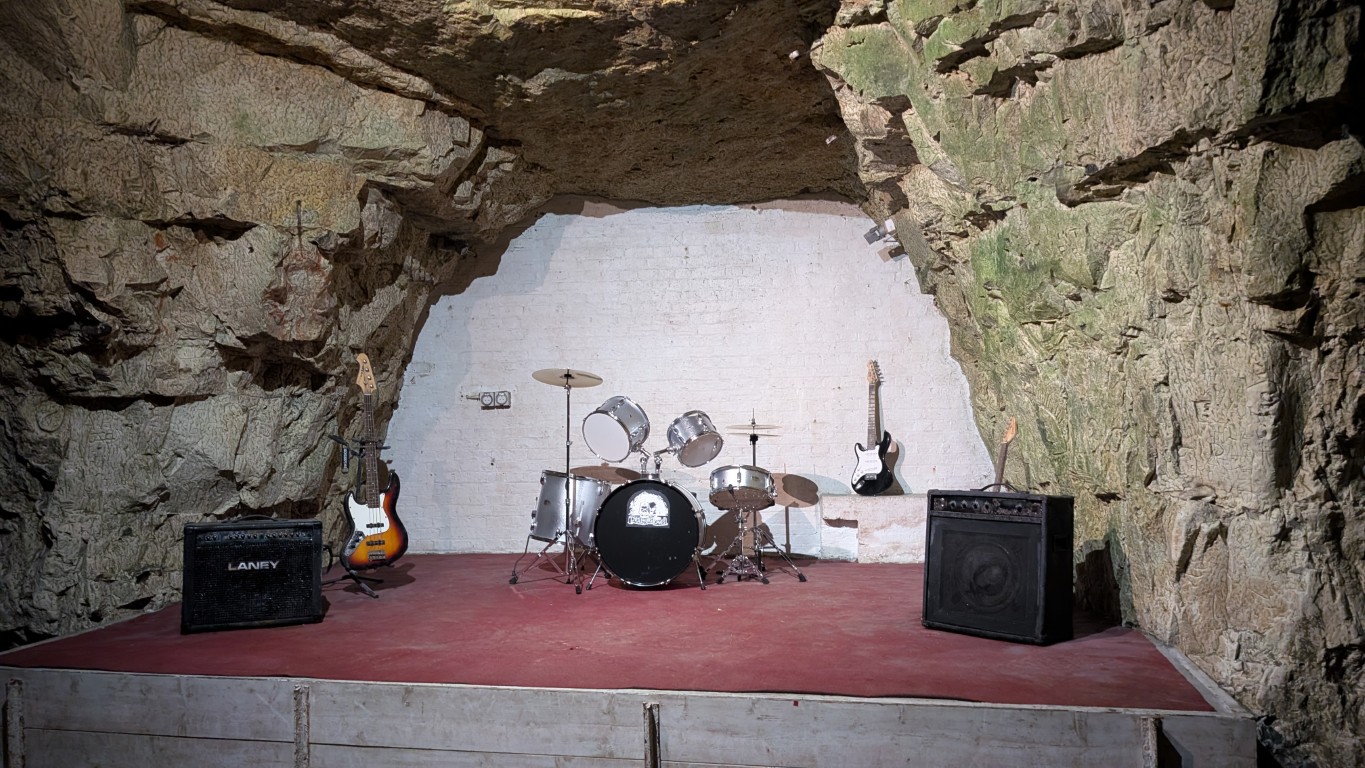
Beyond the ancient history and the war years, there is the music. It turns out they used to hold legendary pop concerts down there, and there’s still a little stage set up today. The roster of people who performed in those tunnels is incredible: a teenage David Bowie played here at least four times in the early '60s, Jimi Hendrix played two famous shows in late '66 and early '67, and other giants like The Rolling Stones and Pink Floyd also graced the stage.
My guide mentioned that Led Zeppelin famously took over the caves on Halloween in 1974 to launch their Swan Song Records label. It sounds like it was an absolutely mental media party rather than a standard gig. Apparently, it involved all sorts of strange goings-on, including a troupe of dwarfs walking around with drinks balanced on their heads and various "scantily-clad" performers. You can only imagine what the atmosphere must have been like in those chalk tunnels during a decadent bash like that.
Overall, it was a fascinating experience, made all the more atmospheric by the fact that I was down there entirely on my own. If you’re ever in the area and want a bit of a unique adventure, it’s well worth a visit.
The Map: