Summary (by AI): I was delighted to discover the unique Mud and Stud architecture in Lincolnshire and felt fascinated by its atmospheric appearance in Thimbleby and its historical connection to early North American settlers.
Blog: To my surprise and delight, I discovered a very specific style of archiecture that that is unique to the Lincolnshire. It’s a notable find, as many of the other counties I’ve been researching don’t always have such a definitive, county-level architectural identity.
The style is known as "Mud and Stud." It’s a straightforward, very old, medieval building method. At first glance, it sounds a bit like wattle and daub, but the process is distinct. They start by building a relatively lightweight wooden frame, and then they coat the entire structure in a combination of clay, straw and animal dung, which acts as a binder.
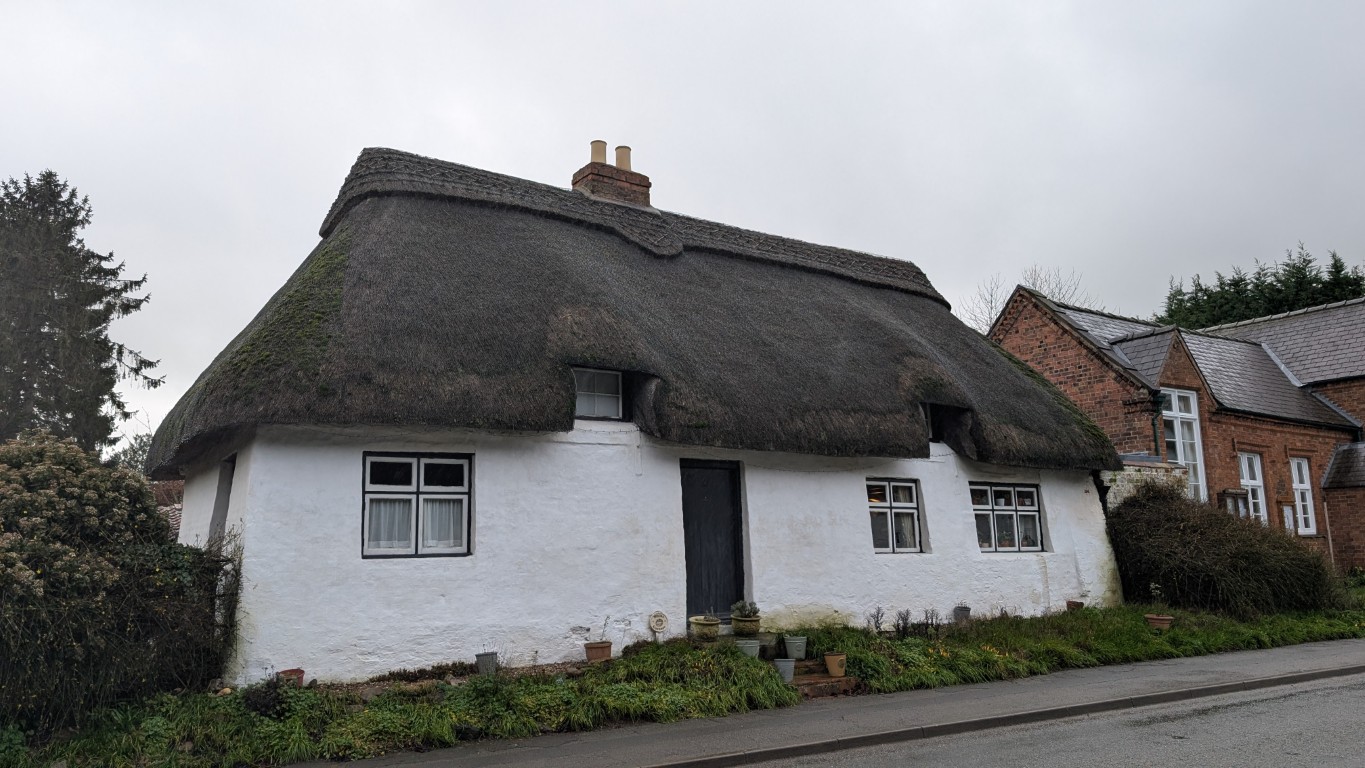
The final step is to whitewash the whole thing. The result is that when you look at a Mud and Stud house, unlike a traditional wattle and daub house, you don't see any of the timbers. It effectively looks like a whitewashed stone building. That whitewash isn't just for aesthetics, though; it’s essential for waterproofing while still allowing the building to "breathe" and move.
Genuine examples of Mud and Stud architecture aren’t exactly common in Lincolnshire anymore, but there is a famous set of them in a village called Thimbleby, right in the center of the county. As luck would have it, I wasn't staying too far away—only about a ten-minute drive.
Even though it was a pretty rough day weather-wise, I drove into the village center, and it was immediately obvious which buildings I’d come to see. They were incredibly atmospheric—quaint, cottage-like, and almost "Hobbit-like" in their appearance. Seeing them in person, you really get a sense of what the architectural historians mean when they talk about the absence of the heavy timber framing you see elsewhere.
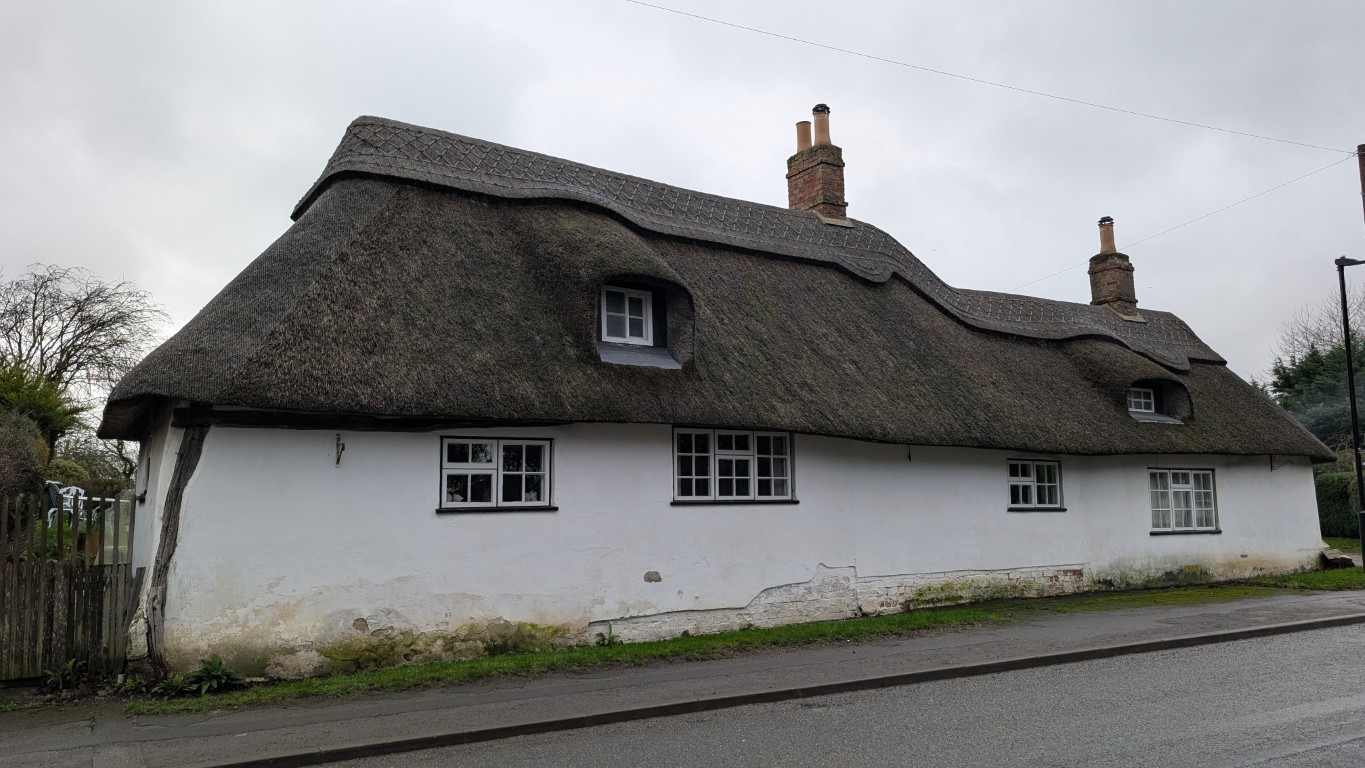
One of the most fascinating things I discovered about this style—which I mentioned in the video—is its connection to the early European settlers in North America. Some of the "founding" groups who traveled from the UK and Europe across the Atlantic actually brought this style with them. In fact, many of the earliest buildings ever constructed by European settlers in North America were built in the Mud and Stud style.
The truth is, the style didn't last very long over there, particularly in places like Virginia. As it turns out, the climate in Virginia was simply too wet and damp for that type of architecture to survive. The climate didn't allow it to persist, but I still think it’s a great bit of history. We got there first!
The Map: