Summary (by AI): My visit to the Grimsby Fishing Heritage Centre was a fascinating, atmospheric experience, but it left me feeling saddened by the sharp contrast between the town's thriving maritime history and its current state of urban decay.
Blog: The Grimsby Fishing Heritage Centre is a fantastic museum. It’s housed in a relatively modern building, situated right where the docks used to be—or where I assume they were. Today, the area has been almost entirely consumed by a massive Sainsbury’s and its sprawling car park. There isn't any immediate evidence left of the fishing industry that once defined this place, which is a real shame, and something I’ll touch on in a moment.
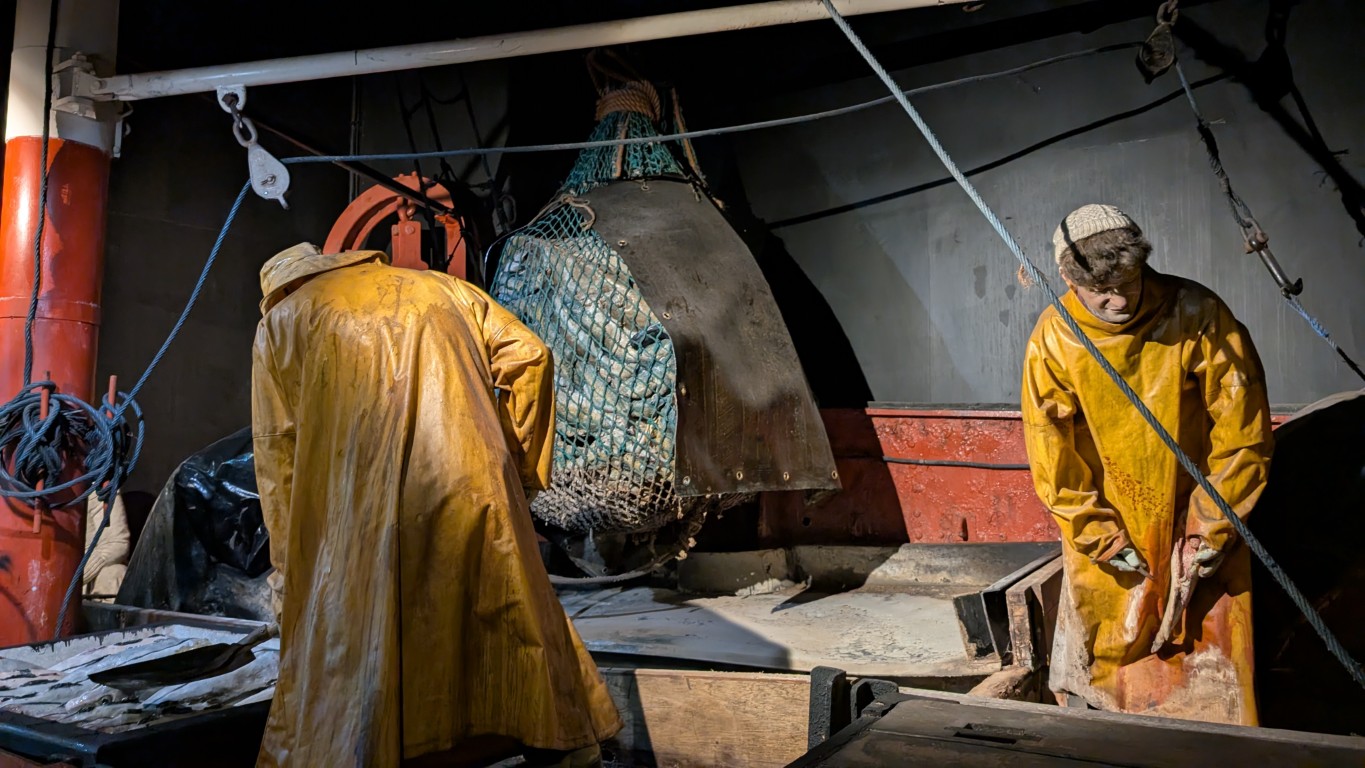
I happened to visit on a random Thursday in the middle of February, just before half-term and I had the entire place quite literally to myself. This made a massive difference because of the way the exhibits are structured. The museum is designed as a series of small, immersive vignettes of Grimsby fishing life.
For example, the first thing you encounter is a mock-up of an old fisherman’s cottage. There’s a lady sitting there mending and darning nets, and a man getting his gear ready to head out to sea for three or four weeks. What really strikes you, though, is that they actually pump in smells to match the scenes. The scent of fish oil was incredibly accurate. It’s a bit off-putting at first—you find yourself wondering if the place just needs a clean—but once you realize it’s intentional, it becomes incredibly atmospheric. From there, you move through various mock-ups: the captain’s cabin, an old pub from the docks, the galley, and the cramped sleeping quarters. Because I was there alone, I was able to take my time, sit back, and really absorb the environment.

It is a profound story of industrial ebb and flow, and how a town’s fortunes rise and fall with it. In its heyday during the 1940s and 50s, the Grimsby fishing port supported the largest fishing fleet in the world. It was enormous. It employed thousands of people in what was, statistically, the most dangerous job in the UK at the time. The town would have been thriving back then, even more so once the railway was built to connect it directly to London.
After I finished at the museum, I decided to take a walk through Grimsby town centre. Sadly, it provided a very sharp contrast to the history I’d just witnessed. It was a sobering look at a place going to rack and ruin.

The town centre felt incredibly depressed—"rough" might be a harsh word, but it fits. There were so many closed-down, run-down shops and a preponderance of cheap storefronts. You can see the evidence of significant migration from other parts of the world, which is a major point of debate regarding its impact on high streets and communities across the country. I think if anyone wants evidence to make their own mind up on that subject, Grimsby is one of those places you can visit to see it for yourself.

It’s a real shame, honestly. It must have been an incredible place when the sailors came home with a massive haul of fish and everyone was working. That’s certainly not the case for the fishing industry anymore. While there’s still plenty of industry around the outskirts—mostly offshoots of the farming and agricultural sectors that still seem to be breathing quite strongly—the town of Grimsby itself has definitely seen better days.
The Map: