Summary (by AI): The Blue Bell Inn is a remarkable piece of Lincolnshire heritage that deeply moved me with its unique "mud and stud" architecture and its poignant, coin-filled oak beams serving as a silent tribute to RAF heroes.
Blog: What a pub.
When I start my research to find pubs for each county, I usually begin with a phrase along the lines of: "Find me the most Lincolnshire of Lincolnshire pubs." Honestly, I don’t think you can find a better example of a place steeped in the heritage of its county than the Blue Bell Inn.
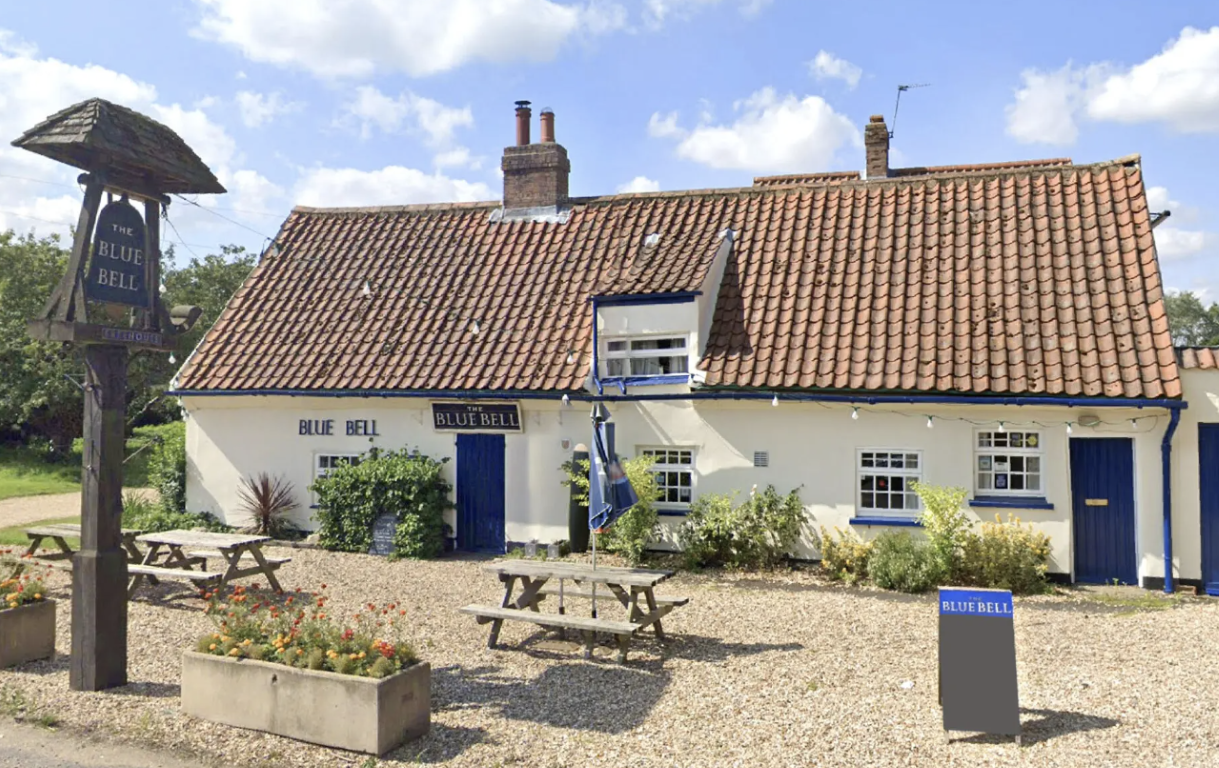
There are two main reasons for this. The first—and perhaps the "less" interesting only because the other is so compelling—is the building itself. It’s a 13th-century structure built in the "mud and stud" style of vernacular architecture. Check out (A)rchitecture. It’s a fantastic surviving example of that ancient building style.
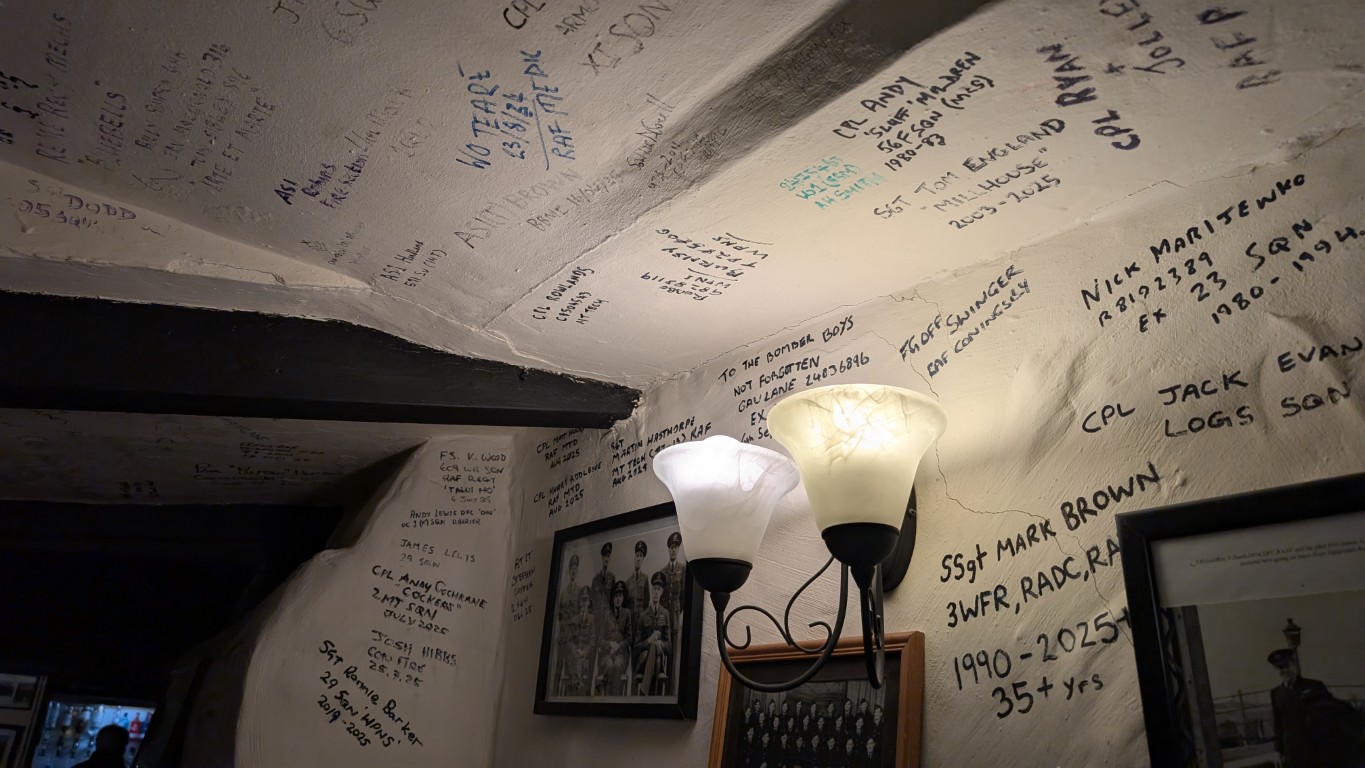
But far more interesting than the architecture is the history this place holds from an RAF perspective. The Blue Bell is situated close to several major RAF bases—some still active, some long gone. One of those former bases was the home of the 617 Squadron, famously known as the Dambusters. Because of that connection, the pub remains deeply embedded in Lincolnshire’s RAF culture. When you walk in, there is memorabilia everywhere—fantastic photos and artifacts covering the walls. Even to this day, servicemen come in and sign their names on the walls. Apparently, Prince William left his signature there during his time in the RAF. I didn't actually manage to spot his specifically, but the story goes that he signed it, as did Ewan McGregor and his brother (I believe they were filming a Dambusters film nearby at the time).
Perhaps the most poignant thing about the Blue Bell, however, is found in its ancient oak beams. If you look closely at the cracks in the wood, you’ll see hundreds of old pennies wedged into them.
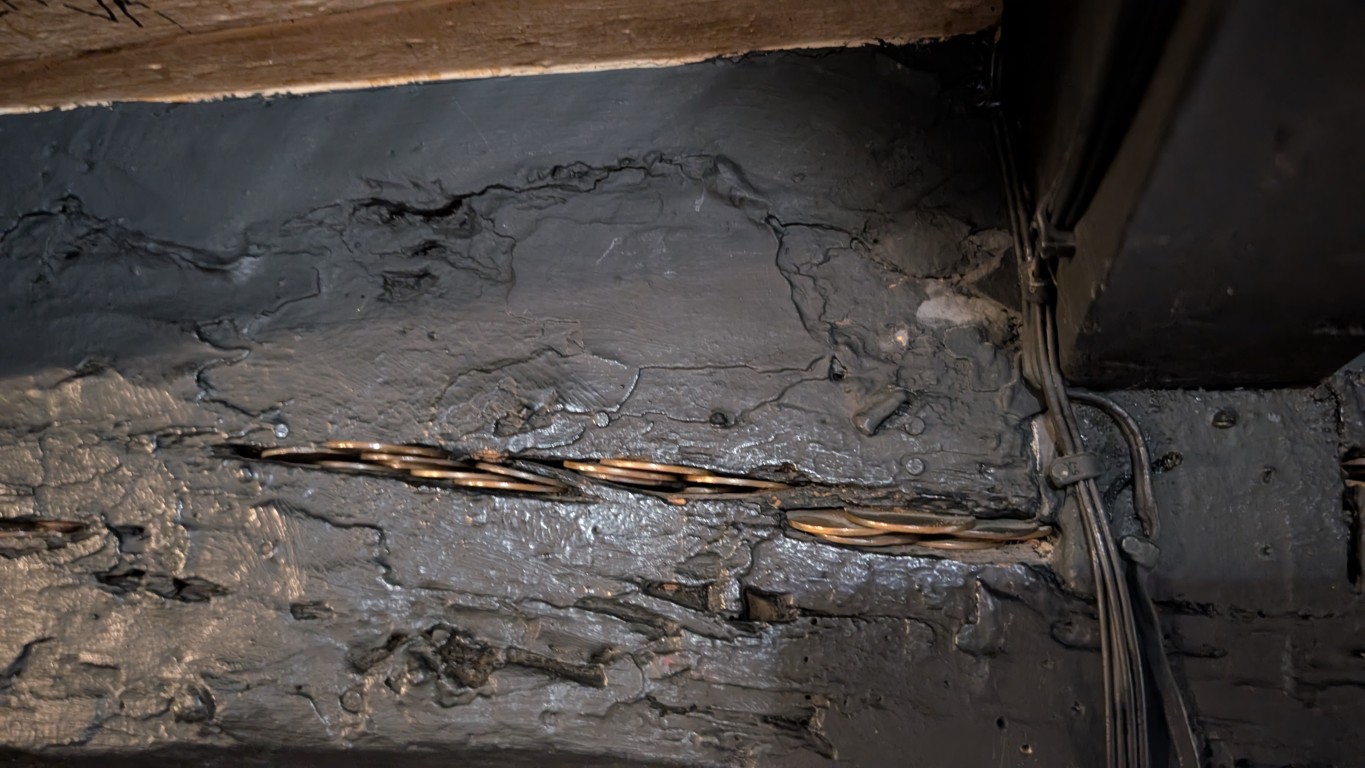
The story goes that as the lads were heading off on their bombing raids, they would come to the pub and wedge their spare coins into the beams. If they came back safely, their money was there waiting for them to pay for their celebratory pint.
Tragically, many of those coins are still there today, stuck fast in the oak. It’s a silent, incredibly sad tribute to the heroes who never returned.
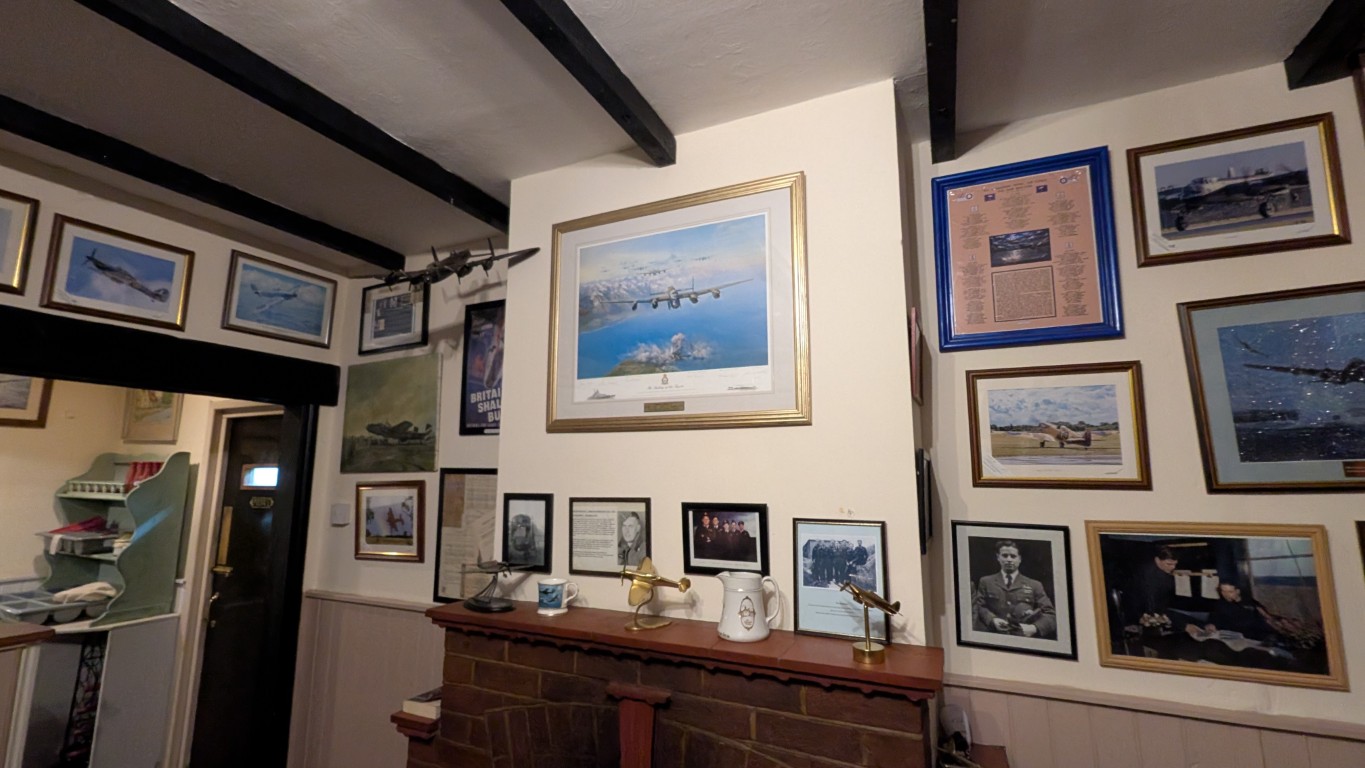
It is a tremendous bit of history and a perfect encapsulation of Lincolnshire heritage. If you're ever in the area, it is 100% worth a visit.
The Map: