Summary (by AI): I was deeply impressed by my walk along the River Pang in Berkshire, finding its unique chalk stream ecology and rich history to be a stunning and world-class experience.
Blog: When I first came up with the "River" category for my ABC tour, I initially thought it might lead me to do some canoeing in every county. But if I’m honest with myself, while I like canoeing, it isn’t a burning passion—and more importantly, it takes a lot of effort to sort out the gear and logistics. The idea was starting to feel a bit onerous.

Instead, I’ve let the category evolve. Now, it’s more about the life around the water: the bridges, the walks, and the history. That shift led me to a deep-dive exploration of the rivers, streams, and canals of Berkshire.
Berkshire is home to some truly impressive waterways—the mighty River Thames being the most obvious, along with the Kennet and Avon Canal. I’d already visited the Caen Hill Locks on the canal, which could have easily fit the category, but there were just so many options. In the end, I stumbled across the River Pang.
The Pang flows through the Pang Valley and eventually reaches the Thames at Pangbourne. I’d never quite realized that there wasn’t a "River Pangbourne"—rather, the town got its name from the river. Or maybe it’s the other way around? Who knows.
What has been absolutely fabulous about this leg of the journey is how I’ve been using AI to help with my research. Lately, I’ve been using Google’s NotebookLM. It’s incredible—you can feed it content and it generates a hyper-specific, surprisingly entertaining podcast about your chosen subject.
I looked at the map and planned a loop starting from Bradfield, passing through Bradfield College, and heading toward Stanford Dingley—a lovely little village with a couple of great pubs. The route follows the riverbanks before climbing into the hills that overlook the valley. I asked the AI to do a deep-dive research primer for this specific stretch of countryside. I even requested an "extra-long" version, which resulted in a 60-minute podcast. I listened to it while I walked, and I’m so glad I did; it completely changed how I saw the landscape.
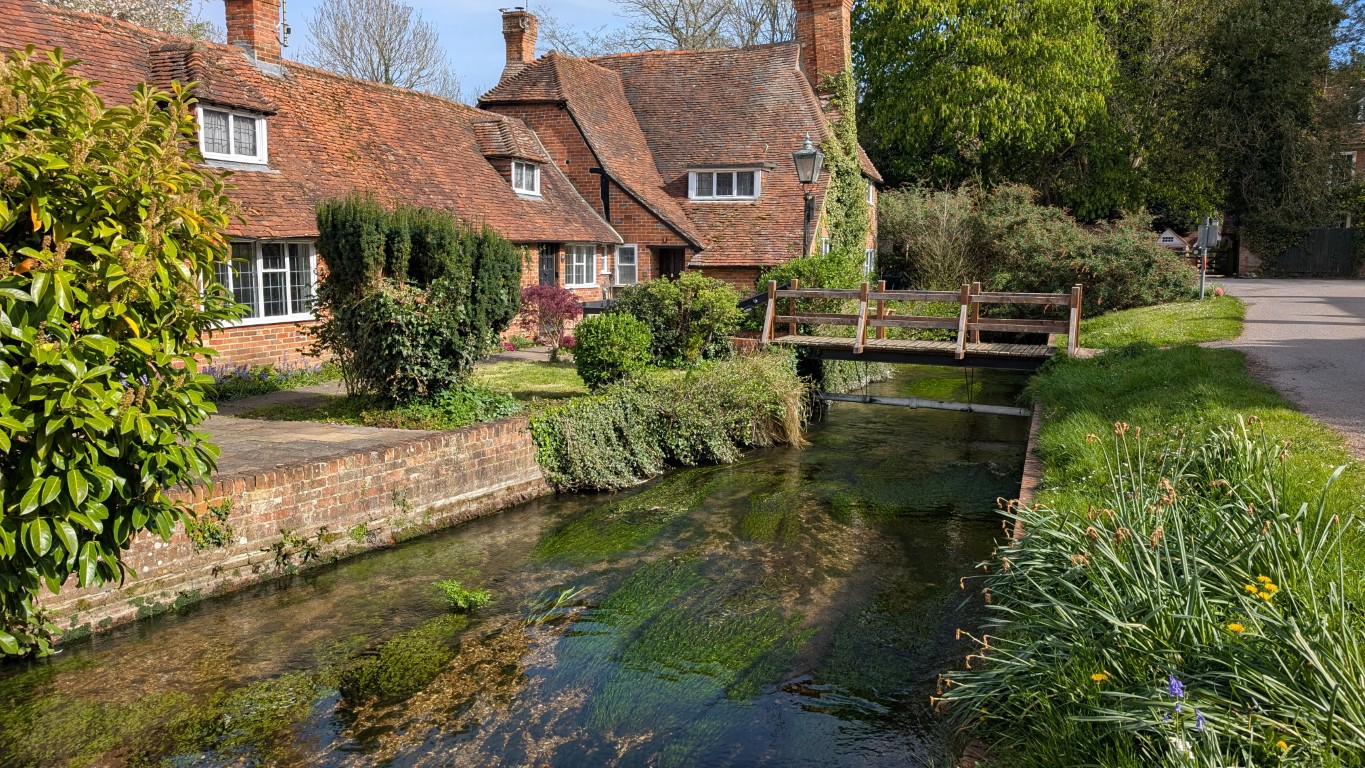
The area is stunning in its own right, but the ecology is what makes it world-class. The Pang is a natural chalk stream. There are only about 200 of these left in the entire world, and 80% of them are in Southern England. Ecologically speaking, a chalk stream environment is rarer than a rainforest.
Walking along with the podcast in my ear, my eyes were opened to things I would have missed. For instance, the valley itself is wide and open, cut out of the chalk hills. But it wasn’t the Pang that did the carving; the stream is far too small for that. It’s actually a "misfit stream" in a "force valley," carved out by the massive movements of the last Ice Age.
Then there’s the history. Stanford Dingley has been around since the "olden days"—it was recorded in the Domesday Book, which noted a mill on the site. That mill was quite rare for its time, but even more interesting is what it became later: the epicenter of the local tanning industry.
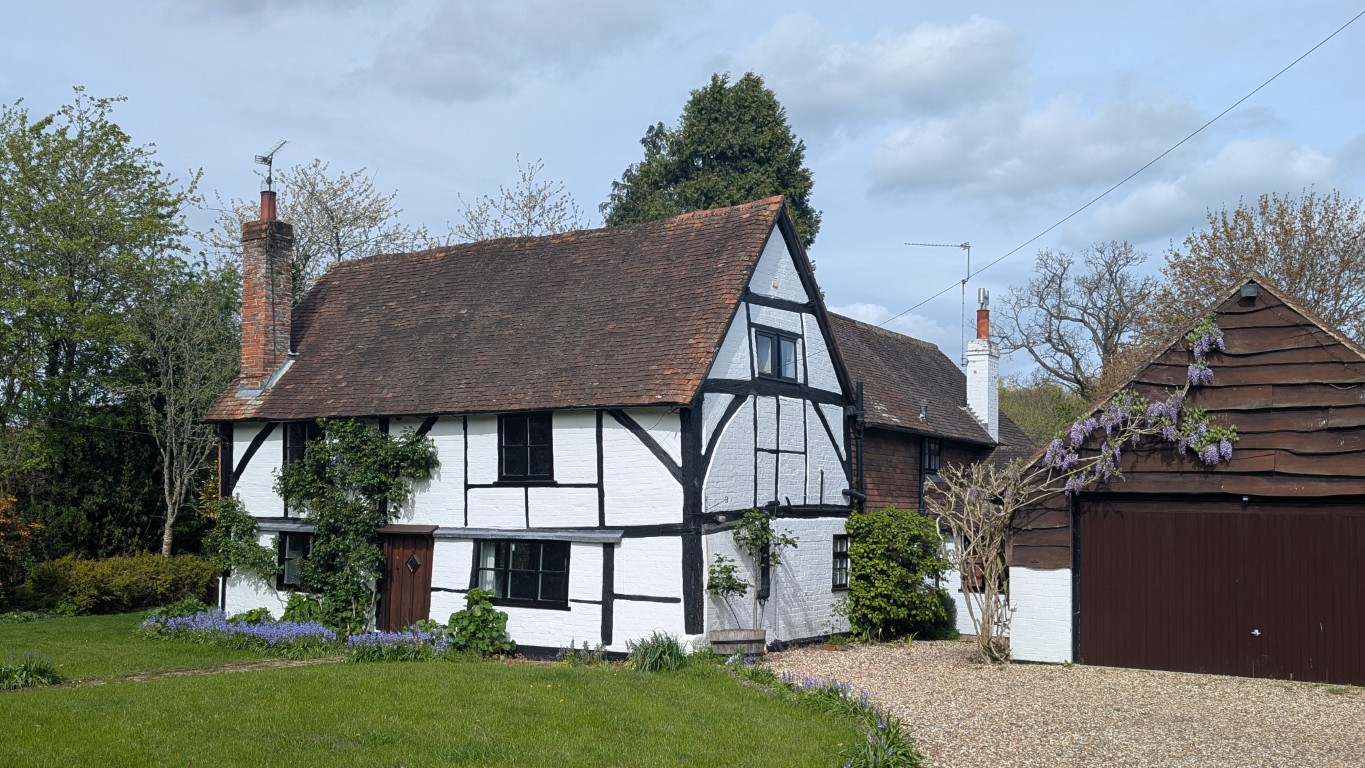
To tan leather, you need two things: a good supply of tannins (which you get from oak bark) and power to crush that bark. It turns out the Pang Valley is perfect for wild oak trees; as you walk, you see them everywhere. That combination of timber and water power made the village a hub for tanning. I looked for remnants of the old mill house but couldn't spot it, though I did see the grand "Mill Master’s House." I also passed "The Old Boot" pub, which looked tremendous, though it sadly wasn't open the day I walked by.
The geology of the river affects the water in a fascinating way. Because the water is squeezed out of deep chalk beds rather than just being rainwater runoff, it emerges at a constant, "balmy" 10 degrees Celsius, even in the dead of winter. It’s also incredibly mineral-rich.
This warm, mineral-heavy water made the area a prime spot for growing watercress. Farmers turned the meadows into highly structured agricultural fields. Sadly, as the river's health declined over the years, the industry fell away. There was even a legal statement at one point saying the watercress could no longer be sold to the public, and the fields have since vanished.
However, you can still find the "Blue Spring." If you catch it in the right light, the water looks iridescent—shades of blue and purple. This happens because the water enters the river from underground carrying clay deposits that absorb longer light waves, leaving only those beautiful shorter blue waves.
The 10-degree water also gave Victorian farmers a massive leg up. In late winter, when cattle feed was running low, anyone who could get grass to grow early had a huge advantage. They created complex irrigation channels to flood the frozen fields with that warm spring water. This thawed the ground a month earlier than usual, giving them a "spring flush" of grass long before anyone else. It sounds simple, but it was back-breaking work—laborers had to stay up all night monitoring sluice gates to ensure the fields didn't over-flood.
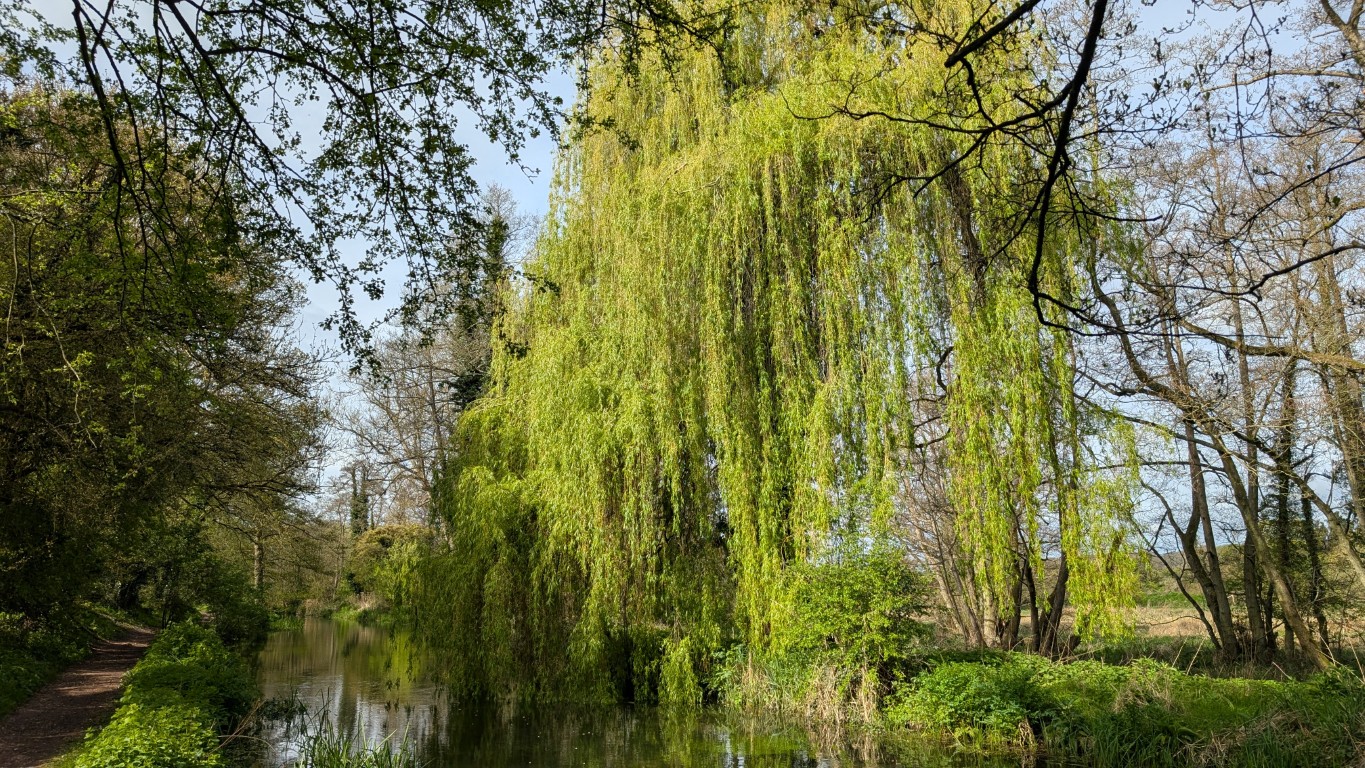
Finally, there’s the literary connection. The Pang was a major inspiration for The Wind in the Willows. The author, Kenneth Grahame, lived in Pangbourne and spent his time walking the banks of both the Thames and the Pang. As I walked out of Bradfield, I saw exactly what he saw: those fantastic willow trees overhanging the water, their leaves dipping into the current. You can almost see Mole, Ratty, and Badger having their adventures along the banks.
It was a beautiful time of year to visit, right in the heart of spring. The bluebells were out in force, especially up on Gravel Hill above the valley, creating an incredible azure blanket across the woodland floor.
If I had to rate it, I’d say the River Pang beat the Thames one-nil on this particular measure. For a gorgeous countryside walk, it’s hard to top.
The Map: