Summary (by AI): Visiting the statue of John Hampden in Oxfordshire was a rewarding personal journey that allowed me to reconnect with my school's namesake and appreciate his historical legacy.
Blog: This is a highly personal one for me. I grew up in High Wycombe and went to the John Hampden Grammar School. I have to say, I absolutely loved my time there—it was a brilliant school. It was always the more technical of the two grammar schools in the town, the other being the Royal Grammar School (RGS). We always used to take the mickey out of the RGS boys, viewing them basically as a load of stuffy Latin scholars.
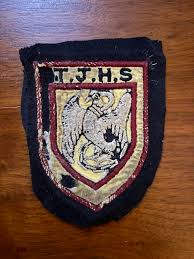
Yet, looking back at my school days, I don’t remember them actually teaching us much history about John Hampden himself. As I've been doing some research recently, none of it rings a bell from my childhood, which is a bit of a shame. The school didn't really play up his legacy back then. So, when I realised there was a statue of John Hampden in Oxfordshire, it was an absolute slam dunk—I knew I had to go and see it.
It turns out that John Hampden, a Parliamentarian famously known as "the Gentleman Patriot," was a cousin of Oliver Cromwell. He rose to national prominence during Charles I’s "Personal Rule"—the eleven-year period when the King ruled without convening Parliament. To raise funds, the King decided to levy "ship money," a tax traditionally demanded only from coastal counties to pay for naval defence. Charles tried to force this tax on inland counties as well. John Hampden stood up and refused to pay it.

The dispute went all the way to court. Although the judges narrowly sided with Charles, it didn’t matter; the public realised Hampden had won a massive moral victory. That was where he earned his reputation as a true patriot, standing up for the rights of the common people against arbitrary power.
So, I set off to find his statue. It’s located in a fairly unassuming place near Chalgrove Field, in a quiet, not particularly touristy part of Oxfordshire. It literally stands in the corner of a field at the intersection of two small country lanes. I had a little stomp around and took a few photos, which was great.
It turns out the statue is positioned there because it was the site of the Battle of Chalgrove Field. During the skirmish, Hampden was struck in the shoulder. He was wounded and taken to the nearby town of Thame, where he unfortunately died six days later.

But his legacy lived on. There is a grand statue of him inside the Houses of Parliament today. Even more fascinating is that during the 19th century, "Hampden Clubs" were formed all across the UK by political reformers who used his name as a symbol of constitutional resistance to arbitrary authority. His influence even crossed the Atlantic; towns like Hampden in Maine and Hampden-Sydney College in Virginia were named in his honour.
It is brilliant to think that the US still carries the legacy of John Hampden, alongside my old school.
The Map: