Summary (by AI): Dundas Aqueduct near Bath; Designed by John Rennie 1797-1805; Creamy Bath stone masonry; Classical Doric pilasters; Grade I listed monument; Crosses River Avon and railway; Restored and reopened 1984; Steep footpath access; Best views from riverbank below; Protected bat roost;
Blog: When you're designing a canal through the steep, rolling countryside surrounding Bath—with dramatic valleys carved out by the River Avon—you’re faced with a fundamental engineering choice about how to tackle the undulations. You either build flight after flight of locks (much like the famous Caen Hill flight further along near Devizes), or you follow the natural contours of the hills, waiting until you can leap straight from one side of a ravine to the other via an aqueduct.
That second approach is exactly what John Rennie opted for when he designed the Dundas Aqueduct. Work began around 1797 and wrapped up in 1805, resulting in an extraordinary piece of Georgian civil engineering: effectively a bridge of water crossing high above the river, as well as the railway tracks of the Wessex Main Line below.

Named after Charles Dundas—the first chairman of the Kennet and Avon Canal Company—it was constructed using the very same creamy, high-grade Bath stone you see throughout the city itself. It’s styled with classical Doric pilasters and elegant balustrades, and the reason for such architectural grandeur was straightforward: appeasing wealthy local landowners. If an industrial canal company was going to erect a massive stone viaduct across their scenic countryside views, it couldn't look like an utilitarian monstrosity. It had to be a work of art. That deliberate design worked a treat, and today it’s rightly preserved as a Grade I listed structure and a Scheduled Ancient Monument.
While we were in the area, I persuaded my wife and teenage son to take a slight detour to see it. There wasn’t an obvious car park right next to it, so we pulled up along the main road and scrambled down a rather steep footpath to reach the canal.
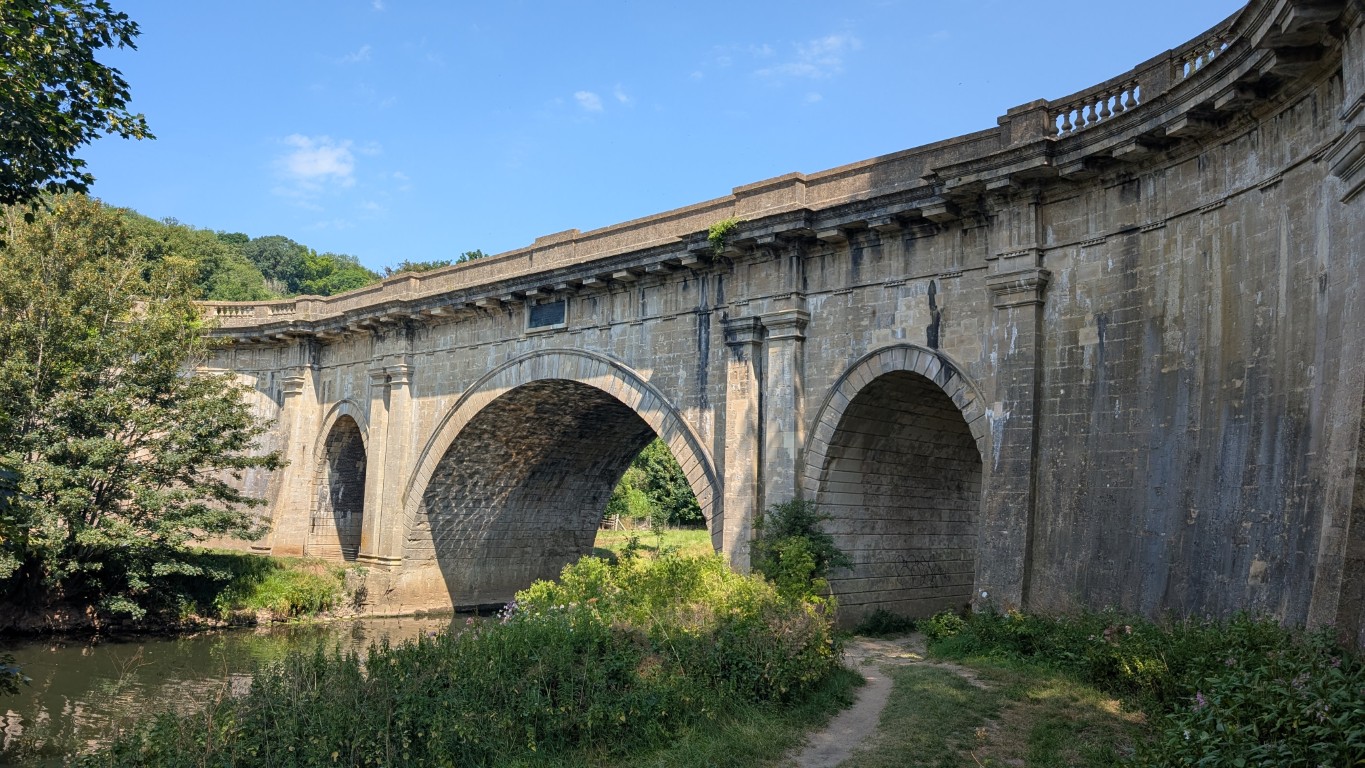
The slightly funny thing about crossing the aqueduct on foot is that, when you’re standing directly on top of it, you almost wouldn't realise the scale of what you're on; it just feels like walking along a normal canal towpath. To really appreciate the drama of the masonry, you have to look at it from below. So, I clambered down the bank to the river below, walked along the water’s edge, and turned round to take in the full, towering view of the arches. The family, having not done the engineering background reading that I had, weren’t quite as thrilled by the scrambling, but it was well worth the perspective.
Interestingly, the aqueduct very nearly didn't make it to the modern day. It developed serious leaks in the 1950s and was drained, leaving it essentially dry through the 1960s and 70s and cutting off through-navigation. Thankfully, an extensive restoration project saw it relined with heavy-duty polythene and concrete, finally reopening to boat traffic in 1984—which, terrifyingly, is now about forty years ago.
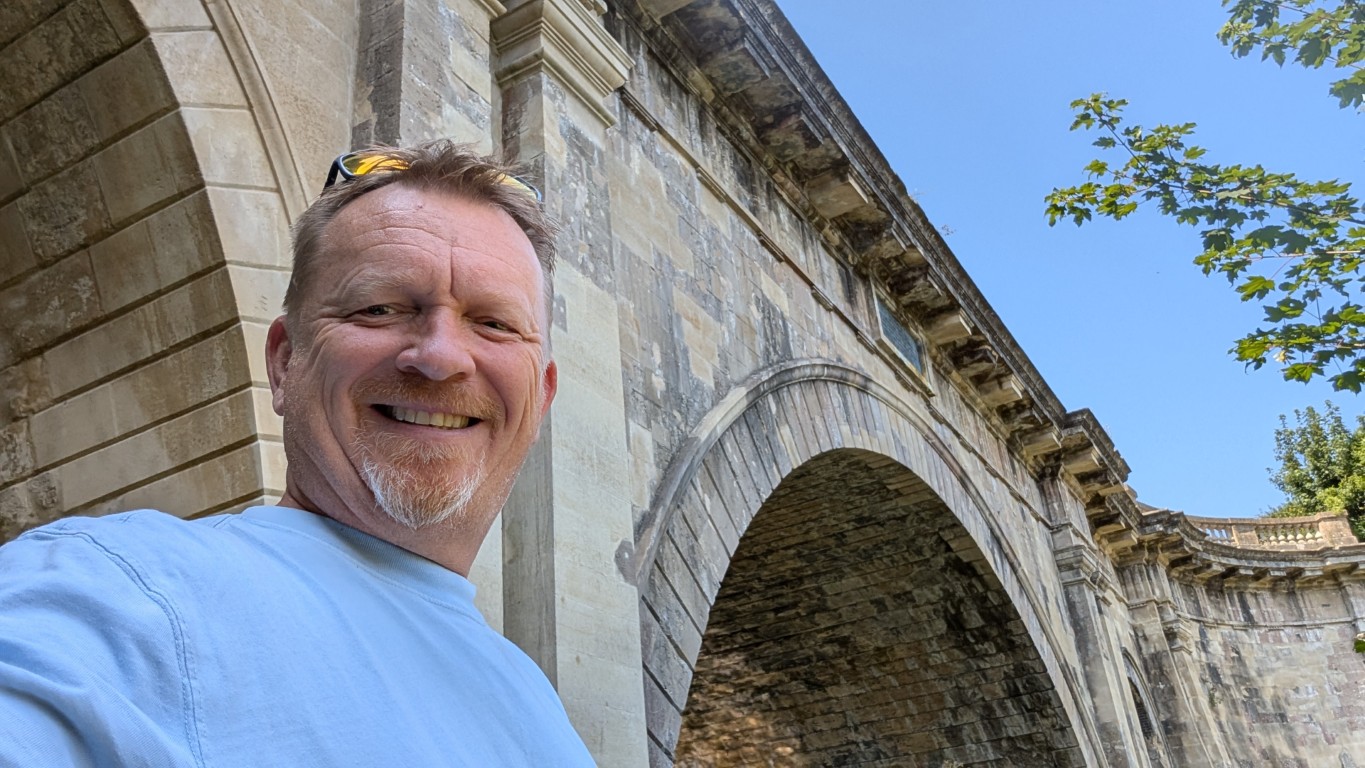
We’d actually been weighing up a narrowboat holiday ourselves around that time. A few weeks later we did end up hiring a canal boat, and we’d briefly considered cruising this stretch of the Kennet and Avon across Dundas. Having just seen it on foot, though, we opted to head up towards Worcester instead.
All in all, it’s a brilliant stop for anyone who appreciates classic British civil engineering. Just make sure you scramble down to the river to get the proper view—and tread quietly around the arches, as it’s a protected roost for local bats!
The Map: